
What has improved
We name the changes plainly — the chord change that used to stumble now holds, the strumming pattern no longer stops halfway through the bar. Written down, so you can see the line of progress instead of guessing at it.
14 Denmark Street, London, WC2H 8LS, United Kingdom
Monday to Friday, 9:00 AM – 6:00 PM
Saturday, 10:00 AM – 4:00 PM
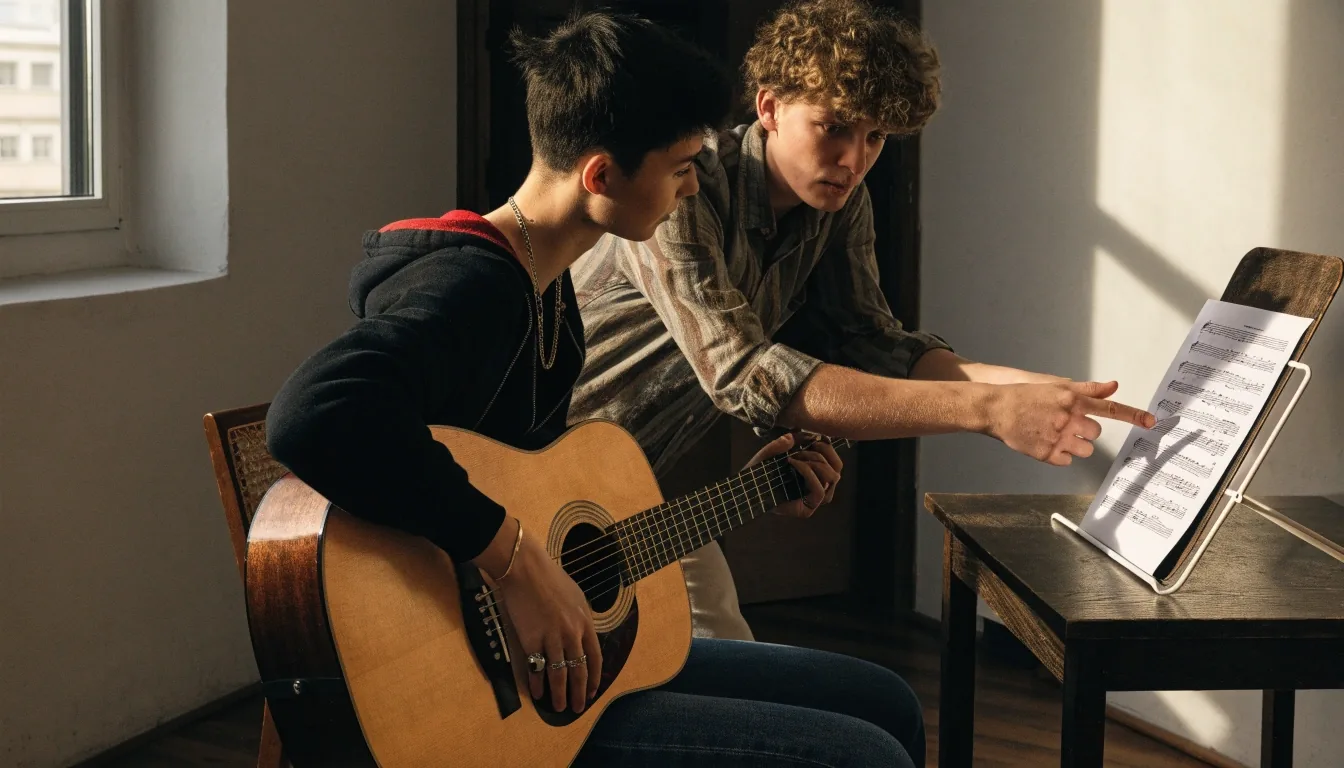
First enquiry to steady progress
This page explains the practical rhythm of tuition at Fretwork Guitar Studio: what happens after you send an enquiry, what a trial session covers, how practice fits around a normal week, and how progress gets reviewed. No surprises, no long contracts to decode. If something here does not match your situation, say so in your enquiry and we will adjust the plan.
Six stages, one plan. Every stage can change.
Lesson planning is a conversation, not a contract. Below is the order most learners move through, and what you can expect from the studio at each point.
The enquiry form asks for your instrument, what you want to play, your experience level, and the times you are usually free. It takes a couple of minutes to complete. You do not need to know which format you want, and you do not need a guitar yet.
If you are unsure about anything, write that in the message box; uncertainty is useful information, not a problem. A half-formed sentence about what you would like to play tells us far more than a blank field, and it usually shortens the planning conversation.
Or call the studio on +44 20 7950 7855 during opening hours.
A written proposal, not a template. It takes in what you told us and comes back with a way in.
You get a reply that proposes a starting path: format, session length, suggested frequency, and what the first few lessons would cover. That reply also includes the cost for the plan proposed, since lesson planning depends on your goals and schedule. If the first suggestion does not suit, say so and we will adjust. Nothing is booked until you confirm.
Format
One-to-one in the room, online, a small group, or a graded-exam route. It can change later.
Session length
Set to how you focus. Longer is not automatically better; a length you can keep matters more.
Frequency
Weekly or fortnightly, chosen around work, study and family rather than a studio default.
First few lessons
A short outline of where you would start and what the first sessions would cover.
One honest note: writing that reply properly takes a little longer than a stock confirmation email. That is deliberate. A plan drafted against your actual answers beats a fast booking that has to be rewritten two sessions in.
Between the sessions
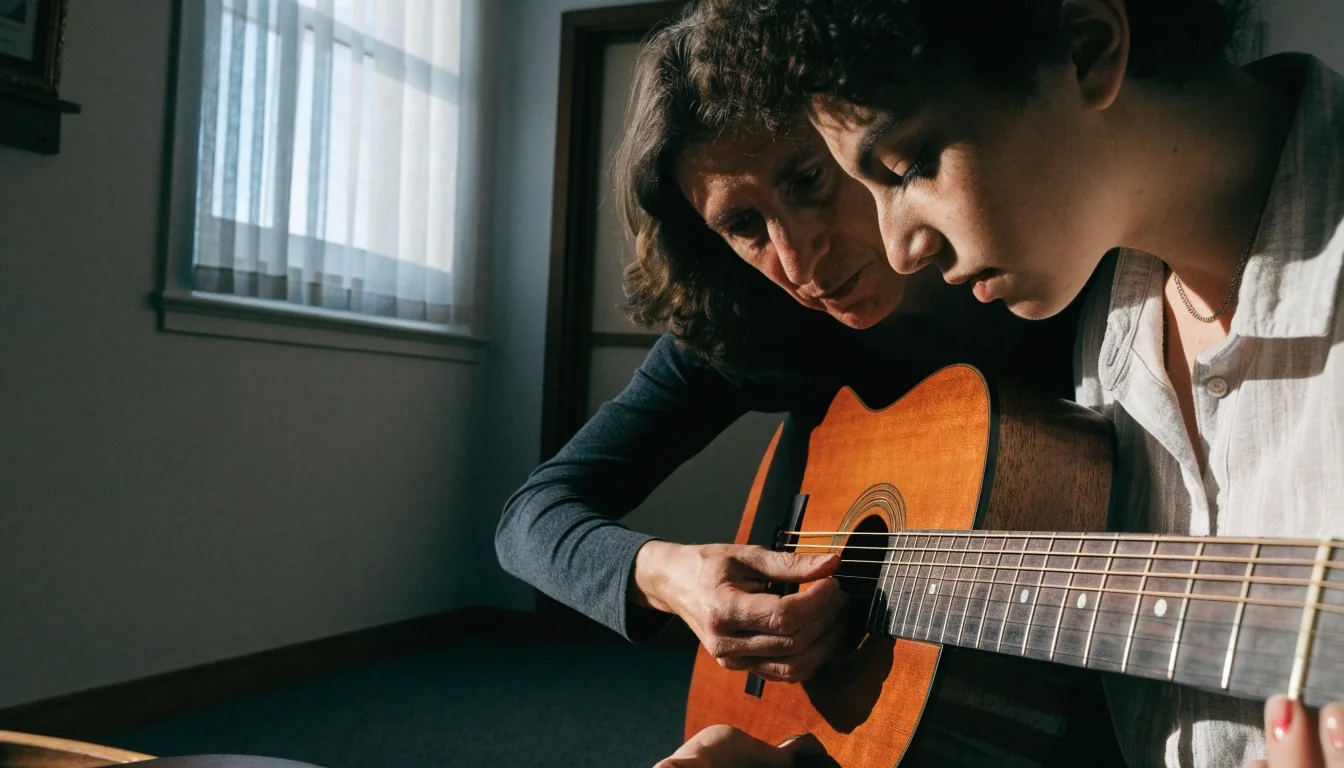
The trial session runs like a normal lesson so you experience the real thing rather than a sales pitch. We look at your hands, your instrument if you have one, and what you can already play. You learn something usable in the first hour, usually a chord shape, a strumming pattern, and a piece of a song.
Your hands and your instrument, if you have one — how you hold it and what already feels natural.
Something usable in the first hour: a chord shape, a strumming pattern, and a piece of a song.
A closing conversation: continue, change format, or leave it there. Nothing is decided for you.
Practice is where playing actually develops, so the routine is built around the time you really have. One long session at the weekend is harder to keep than a short one on most days, and the hands remember repetition better when it arrives often.
You get written notes after each lesson listing what to work on and how. If a week goes badly and nothing gets practised, that is normal and worth mentioning at the next session rather than hiding.
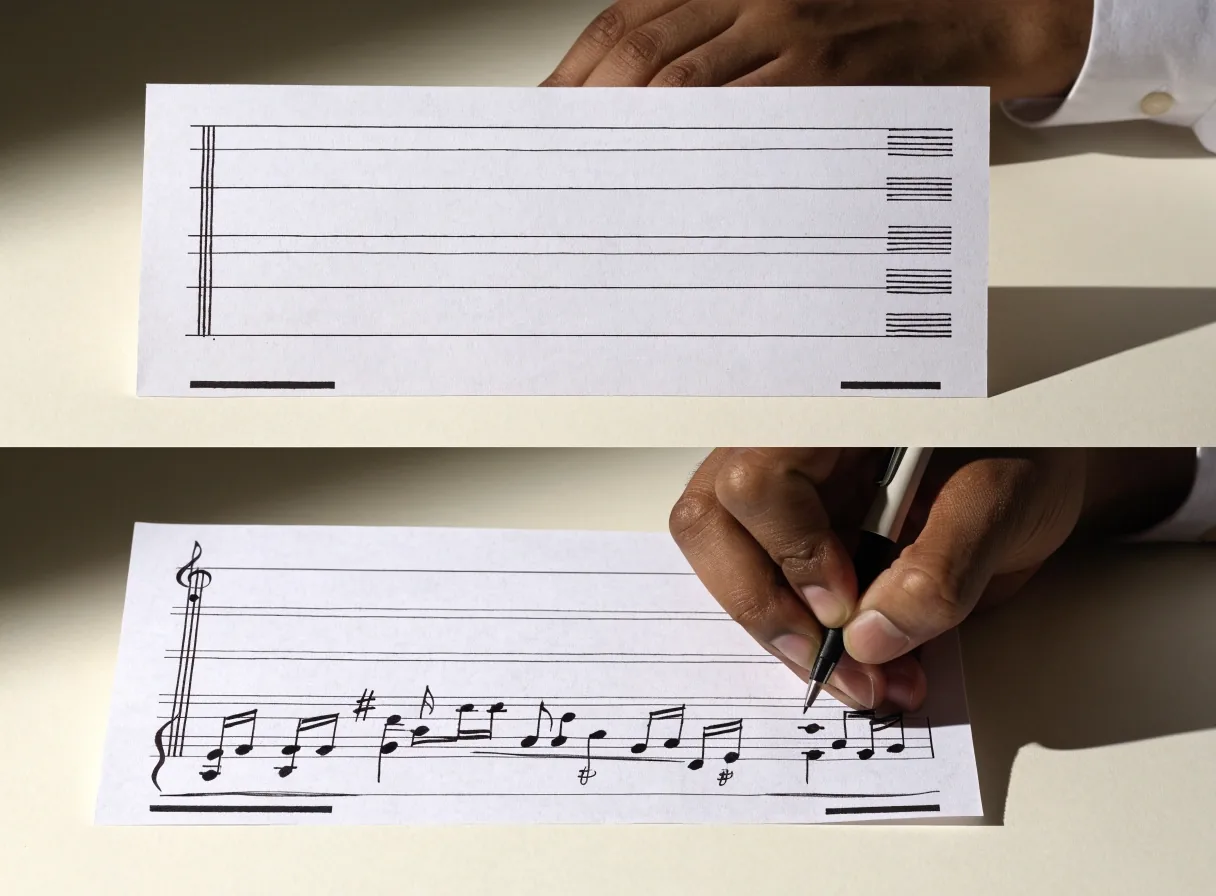
Sizing the routine
15 minutes
On most days. Enough to keep a chord change moving forward without rearranging the rest of your evening.
One day off
Fine, and built in. A missed Tuesday does not undo a Monday, and it is not something to report as a failure.
Slow chords
Start under the tempo you can play cleanly, then raise it. Speed that arrives before accuracy has to be unlearned later.
One song
Always in rotation. Technique work lands better when a piece of music is riding along with it.
Where the routine keeps slipping, we change the routine. If practice is consistently not happening, that usually points to the shape of the week rather than a lack of discipline. Fortnightly sessions or a shorter daily block are both legitimate fixes, and neither is a step backwards.
Every few weeks we take stock. Some of it is data; most of it is hearing the difference in your own playing.
We name the changes plainly — the chord change that used to stumble now holds, the strumming pattern no longer stops halfway through the bar. Written down, so you can see the line of progress instead of guessing at it.
Weak spots get named directly rather than glossed over, because a vague review is not useful to anyone. Often the shaky thing is a small detail: a barre chord that only lands when you are not looking at your left hand, or a rhythm that drifts as soon as you sing.
Each review ends with a small, concrete change to the plan: a new piece, a dropped exercise, a different tempo target, or a shift from strumming to fingerstyle. Small adjustments, made often, keep a plan honest.
Playing a piece from a month ago is the clearest measure there is. It is your own playing, not a scorecard, and hearing the difference yourself is worth more than any rating. Exam and performance goals get a longer timeline with checkpoints along the way.
If progress has stalled, the usual cause is the practice routine rather than your ability — not enough repetition, a tempo pulled up too early, or a week that keeps getting swallowed. That gets addressed directly, with the routine changed before anything else is added.
Turn up to sessions, bring your instrument once you have one, and tell us when something is not working. Practise what was set, or tell us why it did not happen.
A tutor cannot fix a problem they cannot see. A learner who says "this chord change keeps failing" is far easier to help than one who stays quiet and hopes it sorts itself out between sessions. Beyond that, the commitment is yours to set — how much you practise, how often you come, and how far you want to take it.
Bring
Your instrument once you have one. We can advise on a first guitar before you buy, and we do not sell or take commission on gear.
Say
Where the playing slips, whether the week went sideways, and which piece you would rather be working on instead.
Lesson notes after every session, listing what to work on and how.
A plan that changes as you do, reviewed every few weeks rather than set once and filed away.
Honest advice on instruments and formats, from what suits your hands and your budget.
Emails and enquiries answered within a few working days. If a different tutor would serve you better, we will say so.
Learners working towards a graded exam follow a schedule covering set pieces, technical work, sight-reading, and aural tests. These routes need earlier planning than hobby-focused lessons, so mention your exam window in your first enquiry and the timeline gets built backwards from it.
Performance preparation adds stagecraft to the playing: running a piece through to the end instead of restarting at every mistake, managing nerves, and working with other musicians. Bring the date and the setting, whether that is an open mic or a band rehearsal.
Formats are not fixed. Learners commonly start one-to-one and move into a group once basic technique settles, or switch to online sessions during a busy period at work. Frequency can drop to fortnightly for a while and go back up before an exam. Tell us when your circumstances change and the plan will follow.
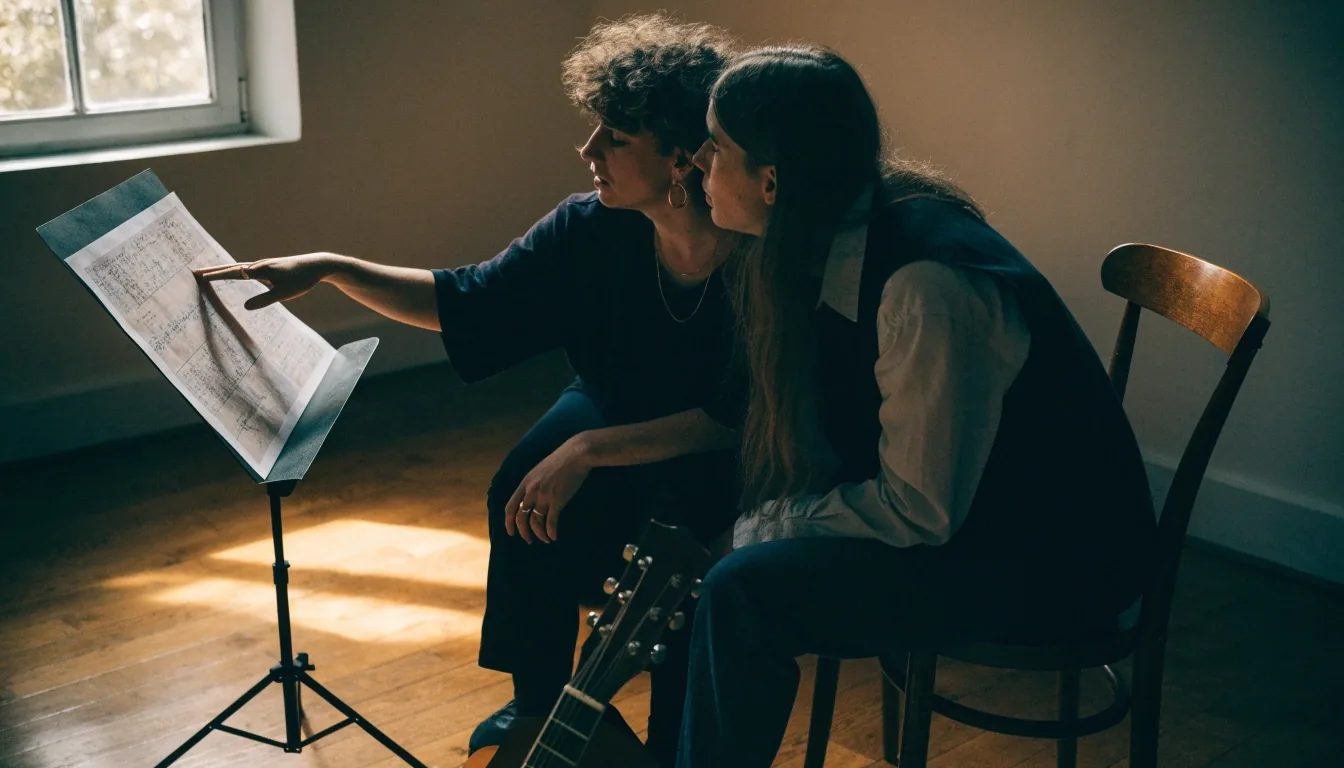
The enquiry form takes a couple of minutes and asks for what you already know. From there you get a written plan, a tutor who answers in their own words, and a route that can change as often as you need it to.
Prefer to talk first? Call +44 20 7950 7855, Monday to Friday 9:00 AM – 6:00 PM, or Saturday 10:00 AM – 4:00 PM. The studio is at 14 Denmark Street, London, WC2H 8LS.
Anything else, put it in your enquiry — a question in the message box is faster than a phone call, and you will get a plain written answer.
Let the studio know as early as you can so the slot can be rearranged. Occasional clashes are part of normal life and are handled without drama. Repeated cancellations slow progress more than anything else, so if your schedule is unpredictable, fortnightly sessions or online lessons may suit you better.
Yes. A large share of enquiries come from adults who have never played. First lessons assume no prior knowledge at all. You will not be handed a theory book and left to work it out on your own — the first hour is spent with a guitar in your hands, working on something you can hear yourself play.
Yes, and several learners do. A week with heavy travel can move online and back to the studio afterwards. The material carries over because the plan is yours, not tied to a room. Say what is happening that month and the format follows.
As much as your week allows, and the plan is written to that. Fifteen minutes on most days is a realistic starting point for most learners; if two hours a week is a stretch, that gets built in rather than assumed. Nothing is collected or checked off — the notes exist so you know what to do, not so anyone can audit it.