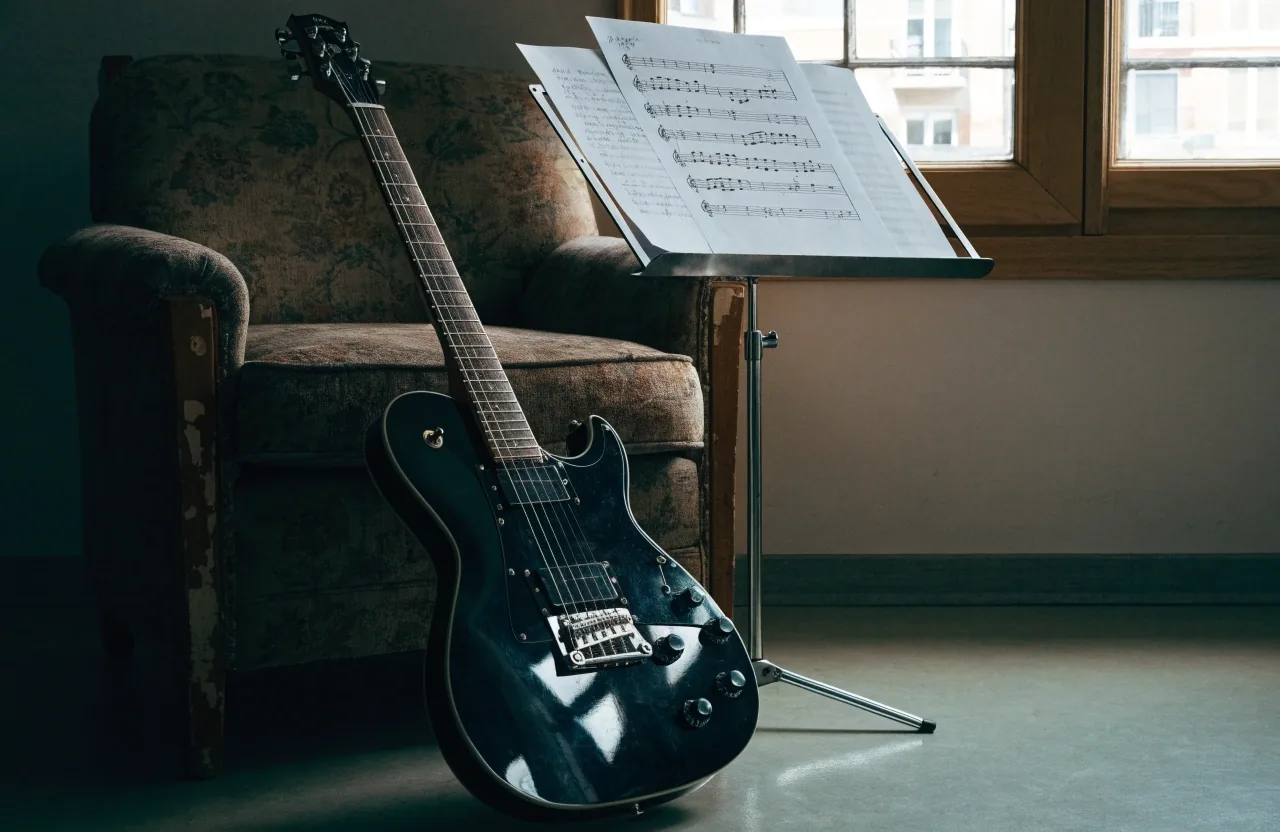
An open guitar practice binder on a stand beside an acoustic guitar in a cool-lit teaching room

14 Denmark Street, London

Beginner guitar lessons, taught properly from week one

Fretwork Guitar Studio is a UK teaching studio for adults and teenagers who want to play real songs on acoustic or electric guitar, and for returning players who stalled somewhere around barre chords and never got going again.

A personal reply, not a price list

Every enquiry gets a personal reply with a suggested starting path: which format suits you, what to bring, and what your first month will cover. You will not see prices on this site because lesson planning depends on your goals, your available time, and whether you want weekly sessions or a shorter block. Tell us what you want to play and we will come back with a plan and the cost for it.

Enquiries go straight to the studio and we contact enquirers directly, usually within a working day. If you are still choosing an instrument or unsure whether weekly sessions fit your week, write that in the form and it gets sorted before your first lesson rather than after.

Where most beginners actually get stuck

People rarely quit because guitar is too hard. They quit because the first month is spent on material they did not choose, with no clear sense of what good enough looks like. A chord shape that buzzes, a strumming hand that loses the beat, a song that changes chord too fast. These are ordinary problems with ordinary fixes, and they respond well to someone watching your hands and correcting the small things.

That is the whole reason a private guitar tutor still makes sense when hundreds of free videos sit on your phone. A video cannot see that your wrist has flattened, that your thumb is creeping over the neck, or that your acoustic guitar is fighting you with heavy strings and high action. Ten minutes of correction in a lesson usually saves weeks of repeating the same buzz at home.

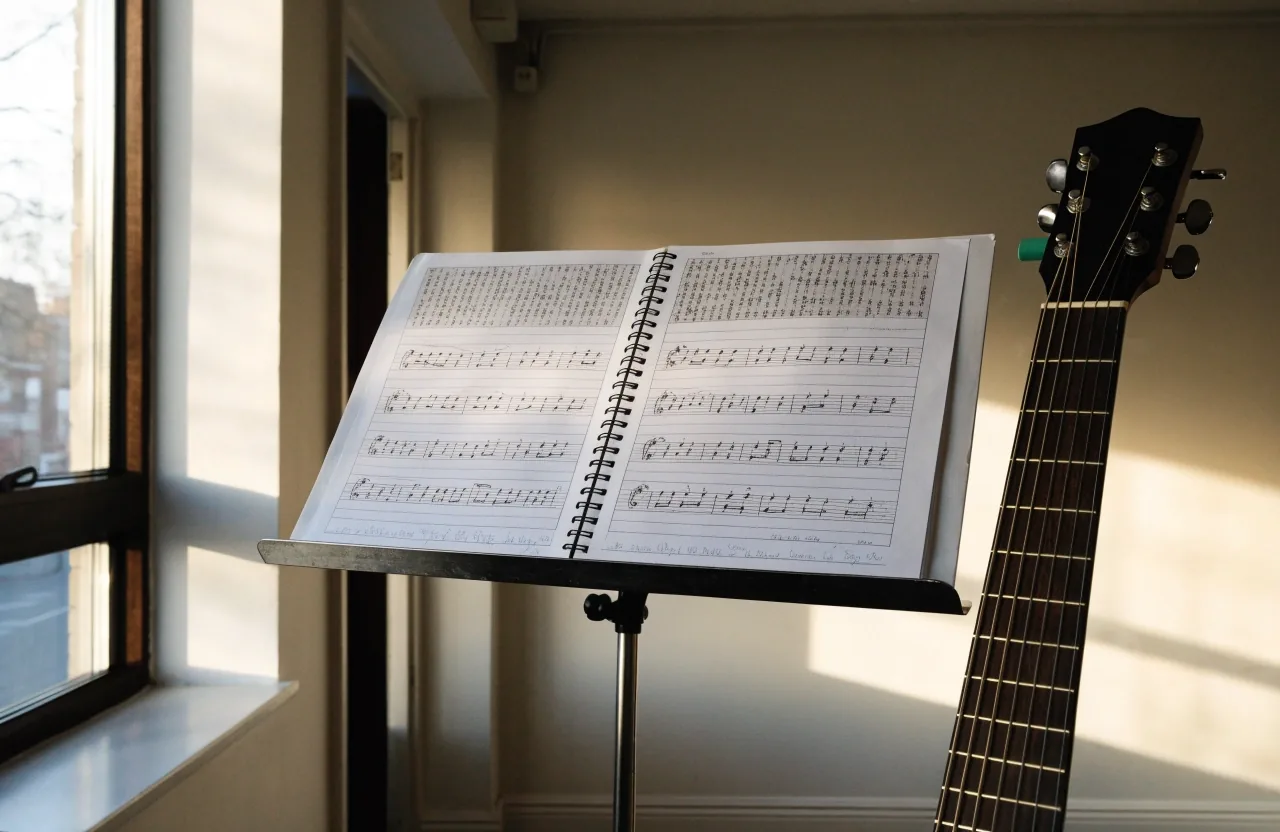
A printed chord grid next to a tablature stave half-filled in by hand
Lesson notes are printed, then finished by hand during the session

What you practise this week is what your hands remember next week. So we choose the material together, at the pace your fingers can actually hold.

What a first lesson looks like

Your first session runs about an hour and starts with your hands, not a book. We check how you hold the instrument, whether your acoustic guitar is fighting you with heavy strings or high action, and what you can already do.

  1. Before you play Posture, strap height and how the guitar sits against you. Small setup changes here do more for comfort than any exercise.
  2. The instrument We check action, string gauge and tuning, and say plainly if what you own is making playing harder than it needs to be.
  3. Chord and strum One chord shape you can actually use, a strumming pattern that fits it, and a short piece of a song you named in your enquiry.
  4. What you take home Two or three things to practise and a clear idea of what the next lesson builds on. No graded exercise books on day one unless you ask for them.

Acoustic or electric first

This comes up in nearly every enquiry, and the honest answer depends on the music in your head. Neither choice locks you in — most players end up owning both — but the first instrument should match the sound you already want to hear.

Acoustic, if you want to strum and sing

An acoustic guitar gets you to a complete sound faster, because you need nothing else to hear the whole song. We work on open chord shapes, strumming patterns and clean changes, then move the capo around when a song sits too low for your voice.

  • Good for singalongs, folk, pop and anything you can play alone
  • Body size matters more than brand; we advise before you buy
Electric, if rock, blues or lead playing pulls you

Lighter strings and a lower action make an electric easier on beginner fingers, and the amp makes bends, riffs and distortion approachable early. It is the quicker route into single-note lead playing and the sound most learners hear in their head.

  • Good for riffs, solos, band playing and finger strength
  • A basic amp and cable is enough to start; nothing exotic needed

We teach both, plus bass if that is where your interest sits, and we will say plainly if the instrument you already own is making things harder than they need to be. Bring it to the first session, even if it has been sitting in a case — a quick setup often changes how a guitar feels in your hands more than any new purchase.

Acoustic, electric and bass — how we teach each
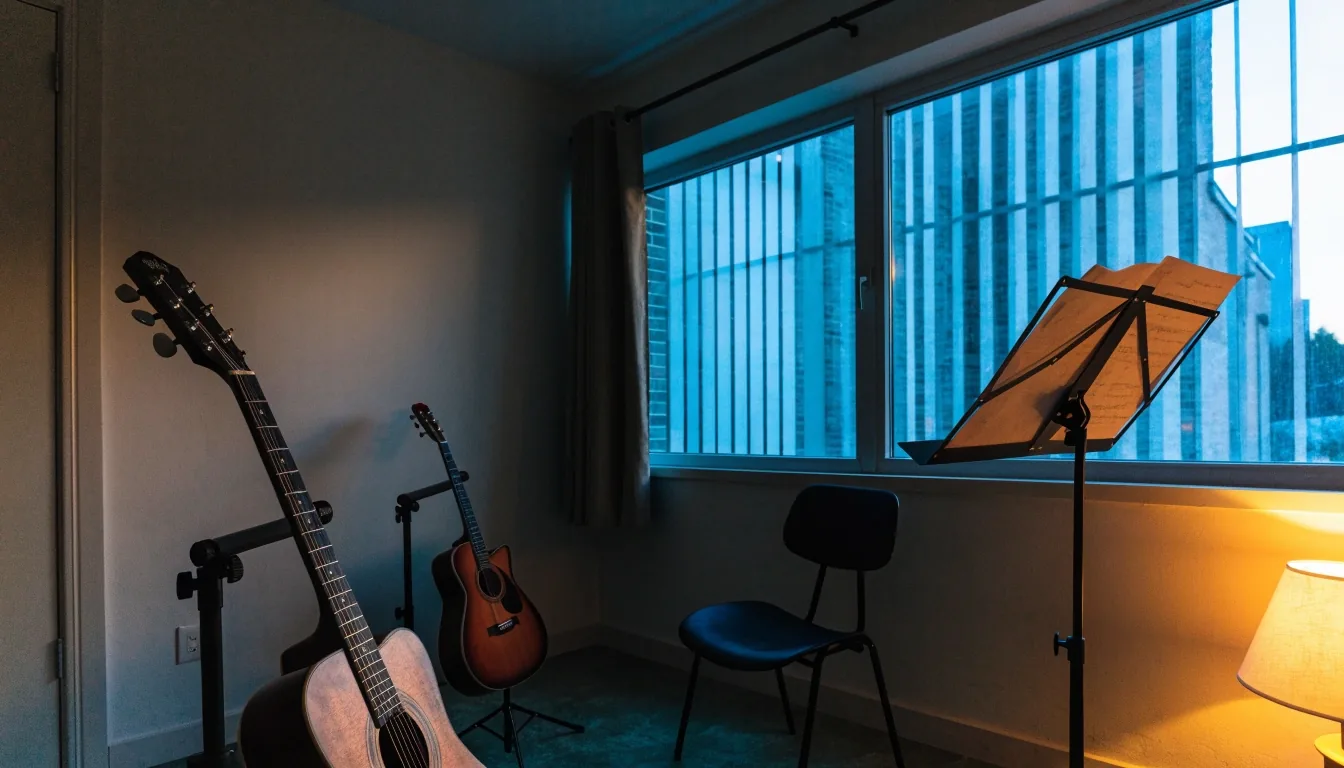
A small guitar teaching room at dusk with two guitars on stands and a music stand

Lessons in person or online

Studio sessions suit learners who want hands-on correction, posture checks, and the discipline of a booked slot. Online guitar lessons work well for shift workers, parents, and anyone outside easy travelling distance of the studio.

At the studio in London

We work through chord shapes, strumming, fingerpicking and tablature reading side by side, with an amp and an acoustic available to compare. You get immediate correction on the things a camera misses: wrist angle, pick grip, how much pressure you are wasting on the fretboard.

Open Monday to Friday, and Saturday mornings

Online, from anywhere in the UK

Lessons over video cover more than most people expect: chord shapes, strumming patterns, fingerpicking, tablature reading and music theory all translate to a call. The main requirement is a stable connection and a camera angle where your fretboard is visible.

Same tutor, same notes by email after each session

We will tell you honestly which format fits your goals better, and if you try one and it does not suit your week, we can switch without starting the plan again.

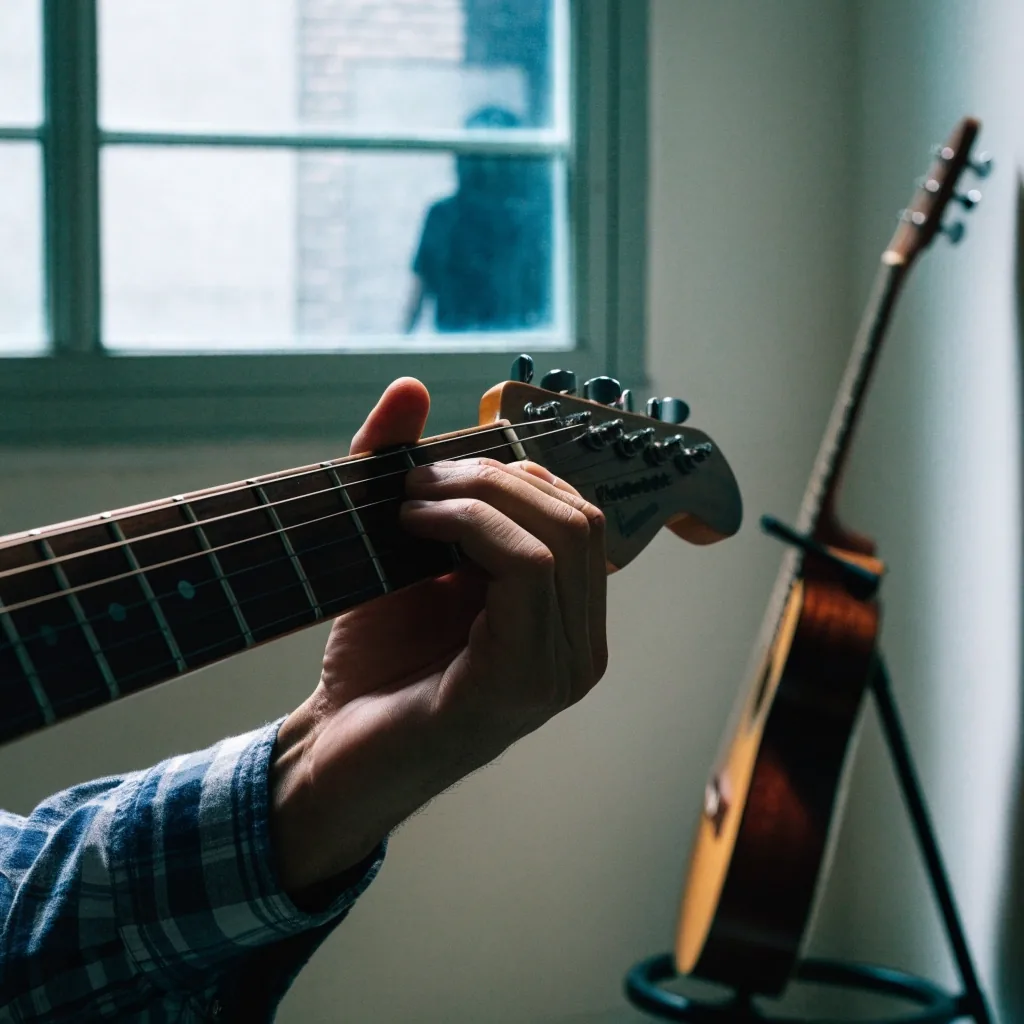
A guitarist's hand forming a barre chord on an acoustic guitar
Chord diagrams and tablature get learners through thousands of songs

Reading music, tablature and theory

You do not need to read standard notation to play guitar, and we will not pretend otherwise. Most learners start with chord diagrams and tablature, which is enough to get through thousands of songs and to play along with recordings you already own.

Music theory arrives when it answers a question you already have, like why a chord change sounds unresolved or how to find the notes in a key. Learners working towards graded exams follow a more structured route through notation and theory, because the exam boards expect it. Both routes meet the same songs — the order is just different.

Song-based learning as the default

Playing music you chose is what keeps practice from feeling like homework. So the material comes from your list: something from your own playlist, a riff you have wanted to play since school, a song your band is attempting.

Break it into parts
We split the song into sections you can manage this week — verse chords, then the change into the chorus — instead of the whole arrangement at once.
Stretch as you improve
Tempo, fuller chord voicings and fingerpicked patterns get added as your hands cope, so the same song keeps growing with you.
Technique lives inside it
The technical work, the exercises, the metronome drills, sit inside the song rather than in a separate folder you never open.
Notes after every lesson
Written notes go out by email the same day, so you are not relying on memory when you sit down to practise.

How the studio sits in the wider guitar world

There is more guitar learning material available now than at any point, and most of it is genuinely good. Apps such as Gibson App and JustinGuitar give beginners chord libraries, tuners, tabs, and guided video with real songs at low or no cost, and Guitar Tricks has built a long-running subscription library organised into structured course paths. Paul Davids shows how far polished explanation and musicianship can carry a lesson video.

If you are self-teaching and making steady progress, keep going. We are for the point where feedback, accountability, or a plan matters more than another video — when you have learned plenty of chords but still cannot get through a song without stopping, or when you want someone to hear you play and say what to fix first.

Browse practice guides

Where structured routes lead

Some learners arrive wanting a formal path rather than a hobby. If that is you, the plan changes shape: more notation, more technical accuracy, and a timetable built around exam or audition dates.

Rockschool Guitar exams

Common in UK popular-music tuition, assessing performance, musicianship and technical skills through contemporary material. A good fit if you want to be marked on songs rather than studies.

ABRSM guitar exams

A more traditional graded route that many school-age learners and private students follow, with a stronger pull toward notation and sight-reading as grades rise.

Beyond grades

Institutions like BIMM Institute, with performance-oriented popular music study across several UK cities, and Guildhall School of Music & Drama in London, where guitar study reaches conservatoire level.

We prepare learners for graded exams and auditions, and we are equally happy teaching someone whose only goal is to play around a campfire. Tell us which end of that scale you are on and the plan follows.

What we need from your enquiry

To write a useful plan we need four things: your instrument, what you want to play, roughly how much time you can practise between lessons, and when you are free. Anything else helps too, such as whether you have played before, whether you own a guitar yet, and whether you prefer studio or online sessions.

If you are unsure about the instrument, say so and we will advise before you spend money on the wrong thing. There is no obligation attached to asking, and you will not see prices on this site — the cost comes back with the plan, once we know what the plan is.

Studio
14 Denmark Street, London, WC2H 8LS, United Kingdom
Hours
Monday to Friday, 9:00 AM – 6:00 PM. Saturday, 10:00 AM – 4:00 PM.

Send an enquiry

Fill this in and we will reply with a suggested starting path. We contact enquirers directly — expect a personal reply rather than an automated message.

Your details are used only to plan and arrange your lessons. See the Privacy Policy for how enquiries are handled.

Who the lessons suit

Adults returning after twenty years away, teenagers preparing for a first graded exam, complete beginners who have never held a guitar, and players stuck at an intermediate plateau all come through the studio. Group sizes stay small, and one-to-one slots are available.

The teaching is patient with slow hands and honest about what progress takes, which is usually regular short practice rather than marathon weekend sessions. If your hands are small, your schedule is tight, or you have tried and stopped before, that is normal here.

How quickly you can expect to play something

Most beginners can play a simple two or three chord song within a few weeks if they practise between lessons, though the timing and the changes will be rough at first. Clean chord changes and steady strumming tend to take a couple of months of regular work.

Fingerpicking and single-note lead playing take longer, and that is normal, not a sign you are doing it wrong. Anyone promising you otherwise is selling something.

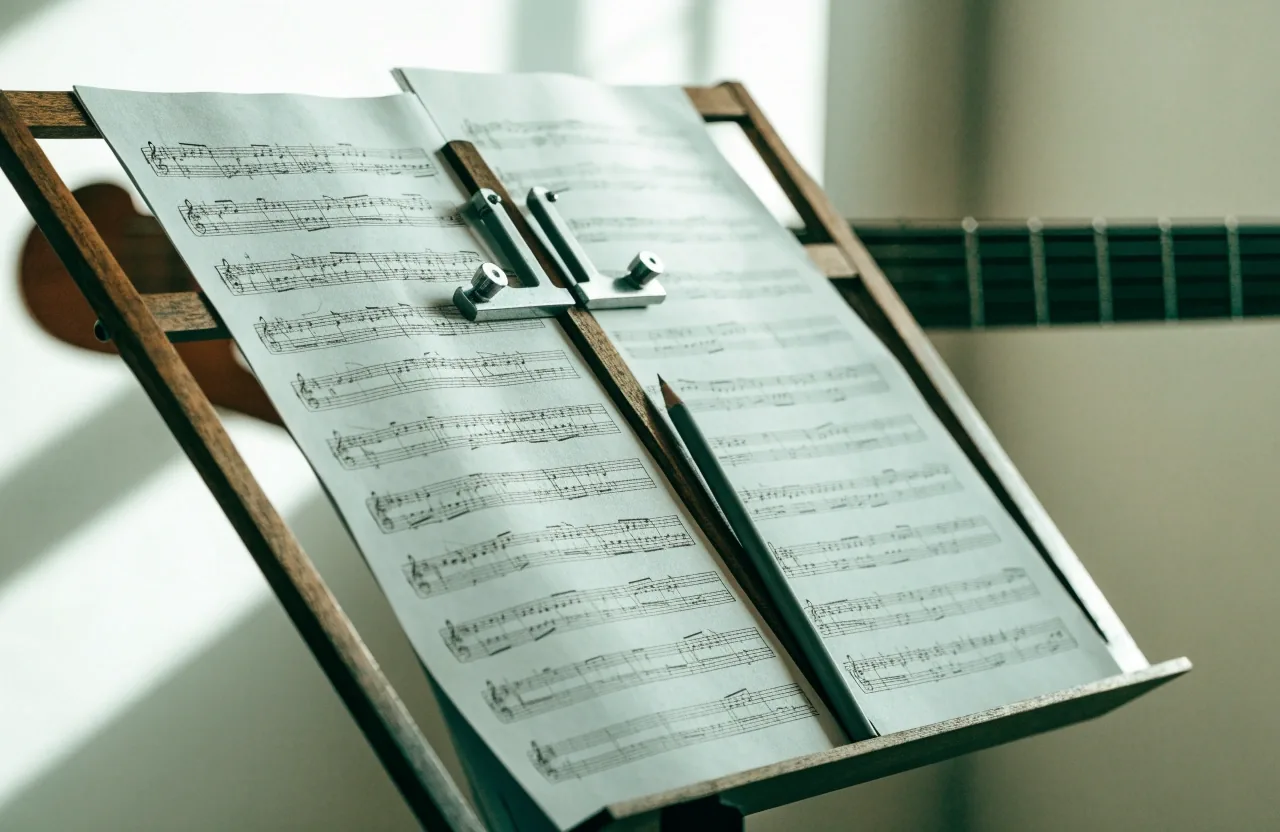
Open printed stave pages with a pencil resting where the printed rows end

Practice, and how much is enough

Fifteen focused minutes on four or five days beats a single two-hour session on Sunday. We build your practice routine around the time you genuinely have, not an ideal week that never happens.

You get written notes after each lesson, so you are not relying on memory when you sit down to play. Progress check-ins happen every few weeks: what has improved, what is still shaky, what changes next. Bring the questions you hit at home and they get answered first.

Browse practice guides

Questions we get before the first lesson

If your question is not here, put it in the enquiry form — the answer is part of the plan anyway.

Do I need my own guitar before the first lesson?

Not necessarily. Tell us in your enquiry what you have or what you are considering, and we will advise on acoustic versus electric, body size, and setup before you buy. If you already own a guitar, bring it, even if it has been sitting in a case for years. We will check whether it needs a setup to play comfortably.

Is there a minimum age?

The studio teaches teenagers and adults, with younger learners considered case by case depending on hand size and attention span. Mention the learner's age in your enquiry and we will suggest a suitable format.

Can online lessons really work for a beginner?

Yes, provided you can show your fretboard on camera and have a connection stable enough for video. Beginners often need a little more patience with camera angles in the first session. If we think in-person teaching would serve you better, we will say so.

How often should I take lessons?

Weekly suits most learners in the first few months, because feedback lands while the habit is still forming. Fortnightly works for returning players who practise consistently on their own. We will suggest a rhythm in your plan and adjust it as you go.

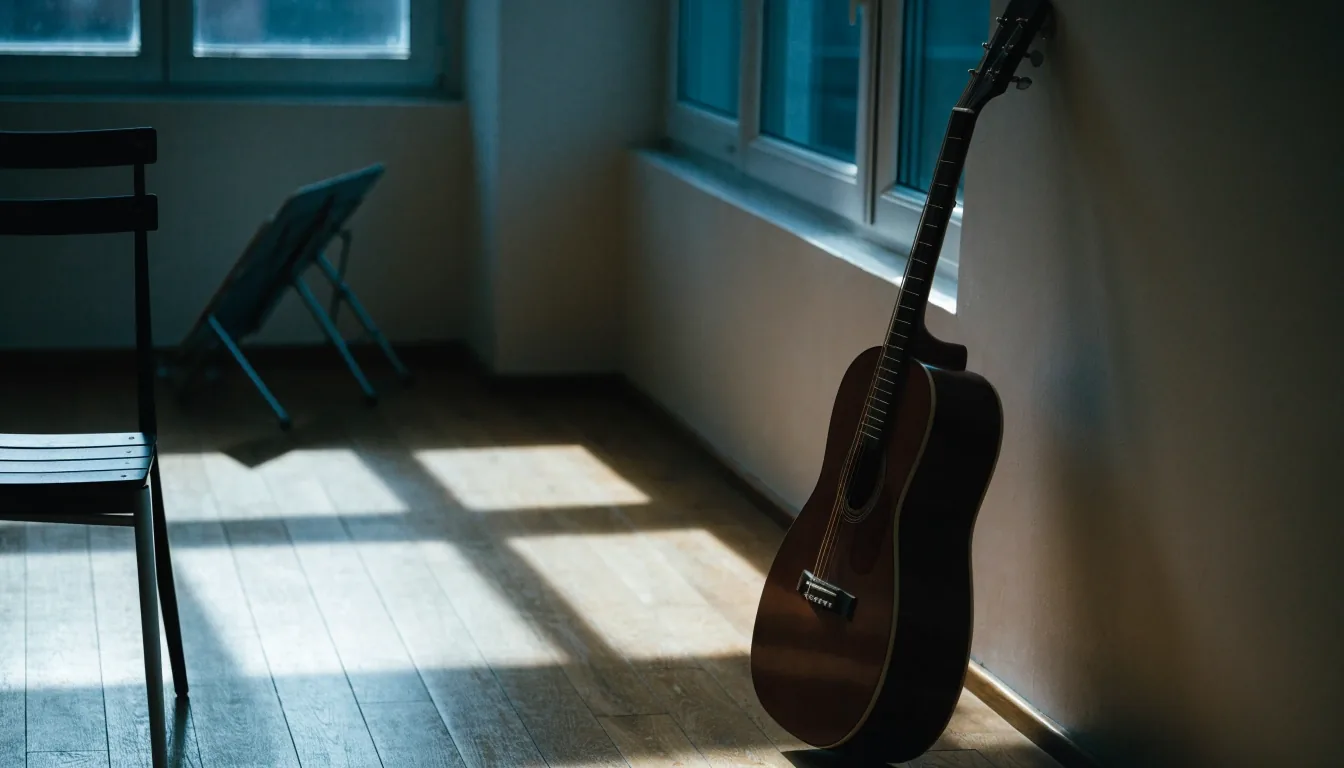
A guitar resting against the studio wall beside a folded music stand in late light

Tell us what you want to play

Send an enquiry and we will come back with a suggested starting path: the format, what to bring, and what your first month covers. Nothing is booked until you are happy with the plan.

Prefer to talk first? Call +44 20 7950 7855 or email [email protected].