
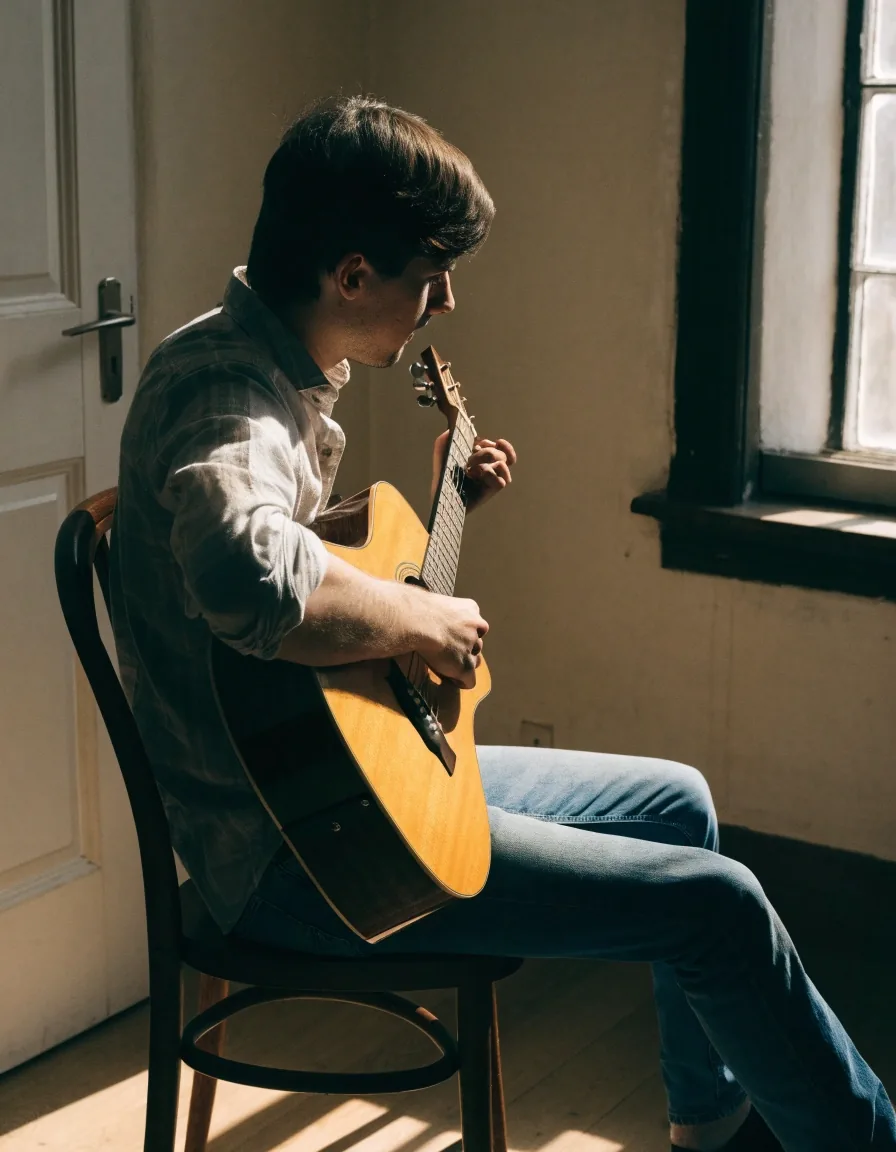
Guitar tuition studio · London
About the studio and how we teach
Fretwork Guitar Studio teaches guitar in the UK to beginners, returning players, and learners working towards graded exams. The approach here was shaped by a simple observation: most people who quit guitar did not quit because it was too difficult, but because nobody adjusted the material to fit their hands, their taste, and their week. The studio exists to fix that one learner at a time.
One learner at a time, in a room in London
Fretwork Guitar Studio is a UK guitar tuition studio. Its teaching is built around people who arrive with a guitar in the corner of the room and a half-formed plan to start again — adults returning after a long break, complete beginners who have never held a pick properly, and school-age learners working towards graded exams. The sentence that shaped the whole studio is the one above: most people who quit guitar did not quit because it was too difficult. They quit because nobody adjusted the material to fit their hands, their taste, and their week.
That has a few practical consequences for how lessons are planned here. The first session is a conversation, not a test. A private guitar tutor cannot fix a learner's week from a screen recording — but a plan can be rewritten so the practice you actually have room for is the practice that moves the playing forward. Everything below explains who writes that plan, how the studio's teaching approach was formed, and what learners can realistically expect from the team.

Who teaches here
Lessons are taught by working guitarists who teach, rather than full-time classroom staff who play occasionally. That distinction matters more than it sounds. A teacher who is still playing shows, functions, pit work or sessions carries the same material you will run into the moment you play with anyone else.
The material comes from playing experience: how a chord change actually feels at speed, why a riff falls apart in front of people, what a sound engineer expects from a guitarist on stage, how long a barre chord really takes before the buzzing stops. That last part matters. Working players answer honestly about what takes months and what takes years, and they do not pretend otherwise.
- 01 Playing experience first — chords, riffs and gigging habits come from the stage, not a workbook.
- 02 Hands-on correction — every session, someone watches what your hands actually do.
- 03 Realistic answers — how long that song will take, and what gets dropped to fit the week.
- 04 One plan per learner — no group template pretending to be personalised.

Nobody quits because the guitar is too difficult. They quit because the material never fit the week.
How the teaching approach was formed
The studio started with adults returning to guitar after a long break — a group most teaching material ignores. Returning players do not need a beginner's method book; they need a quick assessment of what survived and a route back into playing songs. A returning player who remembers four chords and one solo already has more than a method book assumes, and far less than it insists on reviewing.
Start from the goal
The learner names what they want the guitar to do — play three songs at a barbecue, get through a graded exam, join an amateur band, or simply sit down and enjoy playing again. Everything in the plan traces back to that one goal, and anything that does not serve it is dropped, no matter how useful it looks on paper.
Work backwards
From the goal, the plan runs backwards through the skills it needs, then forwards again through the weeks you actually have. A learner preparing for a spring exam gets scheduled preparation time long before the exam date, while someone learning songs for fun gets a looser calendar that still tracks progress across a month.
Since then the same approach has been applied to complete beginners and exam candidates. Beginners get the same backwards planning, just stretched further out and with more time on chord changes. Exam candidates get it compressed, with technical work placed around the pieces rather than bolted on the end.

Lesson notes are written after each session and carried into the next plan revision — the stave keeps filling in as the playing changes.
What lessons are not
Lessons are not a lecture on music theory, and they are not a video course with a person sitting in the room. We do not sell instruments, take commission on gear, or push learners towards exams they have no interest in. If you want to learn three songs and stop there, that is a legitimate goal, and the plan will look different from someone preparing for a grade eight recital.
That is the whole point of the studio's honesty rule: if the plan stops matching your goal, the plan changes, not your expectations.
Not a theory lecture
Theory shows up where it unlocks a song or a change. Nobody sits through a key-signature lesson that was not asked for.
Not a video course with a body
A camera can show you the shape of a chord. It cannot see your wrist position, your thumb, or the two fingers that collapse under pressure at speed.
Not a gear shop
No instruments sold, no commission on gear, no steering towards a particular brand. Advice on what to buy stays in the room.
Not an exam conveyor
Grades are a route, not a requirement. Learners pick them up when they want the structure or the certificate, and skip them when they don't.

Grounded in the wider guitar world
Learners arrive having used apps and video platforms, and that is a good thing. They have already built chord libraries, tuned their guitar by eye, and found a favourite lesson voice. We treat those as useful parts of a learner's week, not as competition.
What platforms cover well
- Chord libraries, tuners and tabs, with guided lessons built around real songs.
- Long-running subscription libraries organised into structured course paths, so a week always has something to practise.
- Well-made lesson videos that show the amount of care that goes into a single piece of technique.
What a teacher adds
- Someone watching your hands and telling you what to change — the part no platform covers.
- A plan that gets revised when your playing changes, rather than a fixed course you follow to the end.
- Honest answers about what to keep from an app, and what to drop so you are not practising in circles.
Exam and progression routes we prepare for
The studio prepares learners for graded exams through two main frameworks. Both run on scheduled preparation time, and both get planned into the lesson calendar well before the exam date, because cramming the week before is exactly what the studio was built to avoid.
Rockschool Guitar
Contemporary material
Assesses performance, musicianship and technical skills using contemporary material, which suits players whose taste runs to rock and pop. The pieces feel like the songs a learner already wants to play, which makes the practice time easier to defend.
ABRSM guitar exams
Traditional graded route
A more traditional graded route with formal assessment, common among school-age learners and private students who want the marking to come from outside the room. The reading and technique side carries more weight, so the calendar accounts for it.
Neither route is right for everyone. If grades do not interest you, they are simply left out of the plan — the same attention just goes into the songs you actually want to play.
Where lessons can lead
Some learners go on to formal music education. BIMM Institute offers performance-oriented popular music study across several UK cities with guitar pathways and industry-facing courses, and Guildhall School of Music & Drama in London teaches guitar at conservatoire level, with the recital culture and technical standards that implies.
Most learners have no interest in either, and that is fine. It is useful to know the ceiling exists, even if you never look up at it.
What you can expect from us
Clear notes, a plan that moves with your playing, and straight answers about formats and realistic timelines. If a different teacher, format or approach would serve you better, we say so rather than keep you booked in.
Send an enquiry-
1
Lesson notes after each session, so what changed this week is written down rather than remembered.
-
2
A plan that gets revised as your playing changes — faster in some areas than expected, slower in others.
-
3
Straight answers about instruments, formats and realistic timelines — no pressure to buy gear or book more than you need.
-
4
Enquiries get answered within a few working days, and the studio contacts you directly to agree the next step.
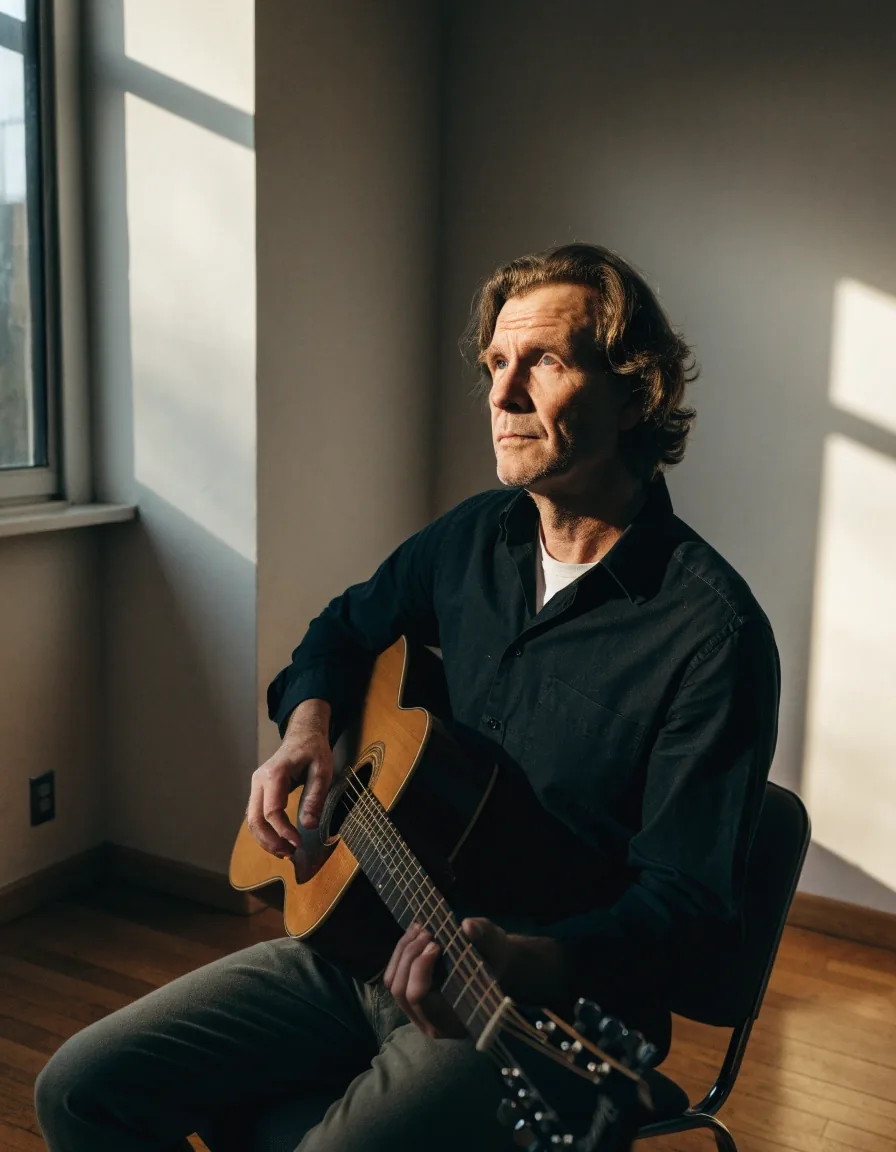
If the studio fits how you want to learn, say hello
Send a short enquiry with your goal and how much practice time you realistically have each week. The studio will contact you directly, suggest the format that fits — private lessons, online, or a graded-exam route — and work out a first lesson plan with you.
Studio details
14 Denmark Street, London, WC2H 8LS, United Kingdom
+44 20 7950 7855 [email protected]
Monday to Friday, 9:00 AM – 6:00 PM; Saturday, 10:00 AM – 4:00 PM.
Prefer to keep reading first? The practice guides cover how to make the most of the week between lessons.